

This is not an analysis. This is my quick expression of love for this film.
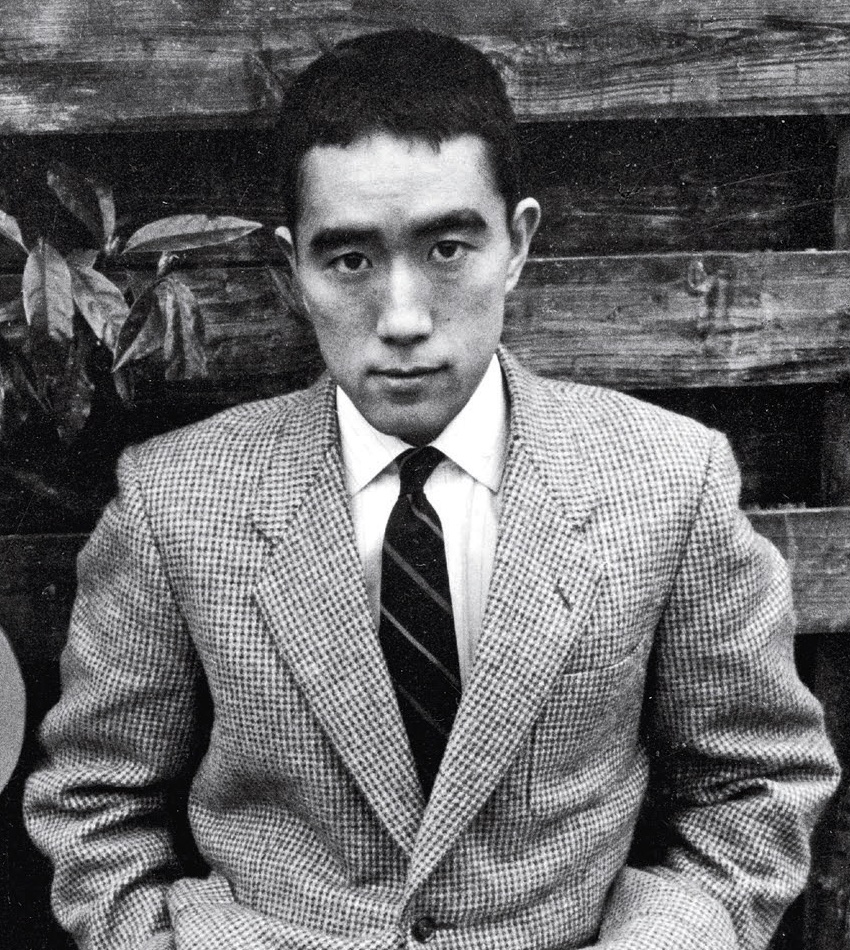
There’s a point in every modern Japanese life where they cross roads with the story and ideas of the infamous Yukio Mishima (三島由紀夫).
I crossed roads with him 3 years ago while researching the treacherous political climate of 1960s Japan. The history education I received in Japan has a dramatic shift after WW2 which we mostly focus on the peace and prosperity post-war Japan experienced. When I saw the picture of the Assassination of Inejiro Asanuma (浅沼稲次郎), a realization sparked in me, “of course the politics would have been treacherous during the global societal change in the 60s, especially for Japan.”
Yukio Mishima was one of the central figures in that political turmoil. A man riddled with contradictions, a reflection of Japan during that time; a country of beauty and death that had been stripped from their ways. Unlike Yukio Mishima’s masculine and far right ideologies, his writing is sensitive and metaphorical. One of my personal favorites is when
he compares making eye-contact with a girl of interest to a drop of red ink dropping and spreading in a clear glass of water. He is a man of contradiction, and he himself knew so.
Mishima strives to find art in the contradiction. The contradiction of death and beauty. The contradiction of the body and spirit. The contradiction of him and himself. The point he reached was death as the ultimate form of beauty, a place that is found in Japanese traditionalism. Which led to Mishima to the controversial coupe attempt in 1970.
Anybody who learns about Mishima’s life will be fascinated by it. It’s surreal to believe he once existed on this Earth. This fascination is captured perfectly in “Mishima: A Life in Four Chapters”, directed by Paul Schrader. There may be spoilers for this film.
The film explores Mishima’s life and spirit through three aspects: his last day, his overarching life, and his novels. His last day is depicted in color and realism, his overarching life in B&W and realism, and his novels in color and formalism. This YouTube video describes each aspect as reality, memory, and imagination. These three sections intertwine with one another throughout the movie, separated in four acts (or chapters) titled “beauty”, “art”, “action”, and “harmony of pen and sword”. Kishōtenketsu (起承転結) is the common four act structure found in many East Asian literature.
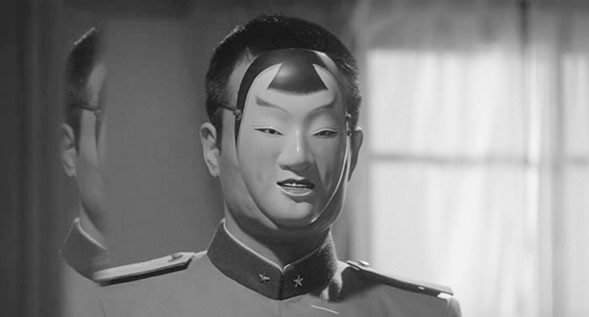
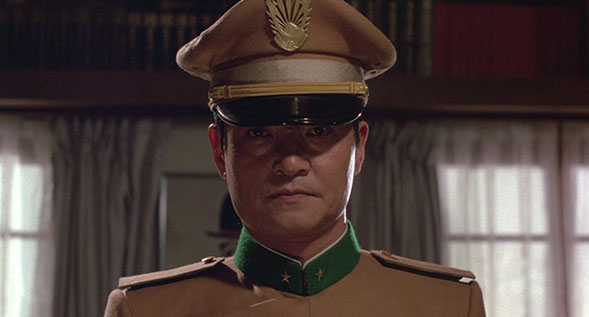

The film brings in high caliber artists involved in the film industry. The visionary direction by Paul Schrader carries you from start to finish. The writing by the Schrader brothers and Chieko Schrader feels like its straight from a Mishima novel. The performance by top Japanese actors, Ken Ogata (緒形拳), Yasosuke Bando (坂東三津五郎), Kenji Sawada (沢田研二), and Toshiyuki Nagashima (永島敏行) reminds one of the great character acting from mid-20th century Japanese cinema. Who can forget the production design by Eiko Ishioka (石岡瑛子) that brought Mishima’s imagination to life with bold yet sensitive beauty. Each shot captured by John Bailey tells so much emotion and narrative, and the editing by Michael Chandler and Tomoyo Oshima (大島ともよ) compiling it into a film that is artistic and entertaining. The unforgettable score by Phillip Glass, that at first I didn’t think would fit the subject, but proved me completely wrong and absolutely transcended the cinematic experience. I wish I had the vocabulary and literary talent Mishima had to properly express how much I appreciated the film. Also, thank you to George Lucas and Francis Ford Coppola for making this film happen!
As you can see from the number of parentheses above, this was a true co-production between the US and Japan. Being half-Japanese half-Black, it was wonderful to see both strengths being pulled out to make this film. The Schrader brothers’ empathy prevents this film from being a Hollywood movie riddled with Japanese stereotypes. That empathy is further extended to the controversial figure himself. They do not judge nor idolize Mishima. Rather he is a character to be understood. How can a intelligent, sensitive man pursue art so deeply that he ends up concluding beauty is death? Was he cursed from birth? Was it his childhood environment? Was it the books he read? We cannot know; we will never know, and the Schrader brothers keep it that way.
What I found most impressive about this film is how the film transitions between reality, memory, and imagination. Each aspect thematically parallels one another, which is established by the book of that section. Each book is presented in order of release date, and the Schraders find the parallels that exist during the moments in Mishima’s life. We realize that Mishima was very pesonal in his works, reflecting what he was going through in his writing. The structure of the film itself reveals who Mishima was as an artist.
All three of his novels presented in this film end on one note: death. Death of beauty (killing beauty), death by someone else, and death by oneself. Mishima’s death wish is hinted at by utilizing the novels. The Schraders’ hold off on the final moments of the novels until they happen with their creator’s death, culminating in one of the greatest cinematic endings of all time.
To be honest, this is the film I strive for. The art and entertainment combined with the intellectual and emotional. Furthermore, an international co-production that generated this cinematic masterpiece. When art is focused on expression of thyself, this is the film that reminds me to create from empathy.
WHAT I’VE LEARNED:
- Having empathy leads to interesting cinematic experiences.
- International cooperation will breed great and unique cinema.
- Artistic and entertainment can and does coexist in one piece.